Everything You Need.
All in One Place.
Tools, payment instructions, Michigan reference pages, and answers to the most common questions about the closing process. Use the sections below to find what you need.
Start With the Numbers
Michigan Closing Facts, Explained
Clear answers to the Michigan-specific questions that come up on almost every closing, with sources.
Understanding the Closing Process
How the Closing Process Works
Once a purchase agreement is signed, Title WRX opens a title order and begins working on your file. Here is what happens between contract and closing.
We receive the purchase agreement and open the file. A processor is assigned and you are confirmed within one business day.
We search the public record for the full history of ownership, open liens, judgments, easements, and anything else that affects the title.
We issue a title commitment listing any requirements that must be satisfied before title insurance can be issued. These are communicated clearly to all parties.
Any title issues identified in the search are resolved. This may include releasing old liens, clearing judgments, or obtaining missing documentation.
Once the file is clear, closing is scheduled. Documents are prepared and delivered in advance. Signing can take place in person or remotely.
Funds are received and verified. The deed is recorded with the county. All parties receive confirmation and the transaction is complete.
What to Bring to Closing
Make sure you have these items ready on closing day.
Valid government-issued photo ID (driver's license or passport)
Certified funds for any remaining balance due at closing (wire transfer only)
Proof of homeowners insurance (buyers)
Any documentation previously requested by your title processor
Bank account information for receiving proceeds (sellers)
Any additional signers required by the transaction (spouses, co-borrowers, authorized representatives)
Tax ID or EIN documentation for LLC buyers or sellers
What Is Title Insurance?
Title insurance protects against losses from defects in a property's title that existed before you purchased it. Unlike other insurance that protects against future events, title insurance covers issues from the past: undisclosed heirs, forged documents, recording errors, unreleased liens, and claims that were not discovered during the title search.
Owner's policy protects the buyer and remains in effect for as long as you or your heirs hold an interest in the property. It is typically a one-time premium paid at closing.
Lender's policy is required by most mortgage lenders and protects the lender's interest in the property up to the loan amount. It does not protect the buyer directly.
How to Submit Your Earnest Money Deposit
Title WRX offers three options for submitting your earnest money deposit. All earnest money must be received and cleared prior to closing. There are no exceptions. Closing funds are submitted by wire transfer only.
Title WRX ePay
Our preferred method for earnest money deposits. Fully electronic, encrypted, and secure. Initiate a transfer in under 90 seconds, connect to any US financial institution, and never share your routing or account numbers.
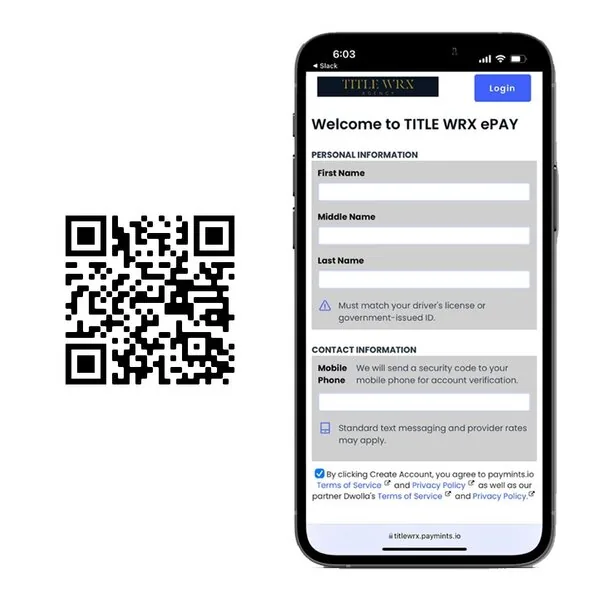
Scan to access Title WRX ePay
Open Title WRX ePay ›Wire via CertifID
Wire instructions are sent exclusively through our secured CertifID portal. Upon receiving any wire instructions, always call our office to verbally confirm before initiating the transfer.
Always verify by phone before wiring. Call us at (248) 230-2670 to confirm wire instructions before sending any funds.
Cashier's Check
Paper checks can be mailed or dropped off in person at our Royal Oak office. Allow 7 to 10 business days for delivery if mailing.
Drop off or mail to:
1320 N Campbell Rd Suite #1
Royal Oak, MI 48067
How to Protect Yourself
Wire fraud targeting real estate transactions has increased significantly. Criminals compromise email accounts and send fraudulent wire instructions that appear legitimate. Here is how to protect yourself.
Always call (248) 230-2670 to verbally confirm wire instructions before sending any funds, even if the instructions look exactly right.
Do not click links in unsolicited emails asking you to verify account or payment information. Look up contact information independently.
Carefully examine email addresses and URLs for subtle differences. Fraudsters use slight variations to appear legitimate.
Be especially cautious if someone is pressuring you to act quickly. Urgency is a common tactic used by fraudsters to prevent verification.
Enable two-factor authentication on all accounts. Never share passwords or security question answers online or on social media.
If you are buying or selling a home, avoid sharing that information publicly. Fraudsters specifically target active real estate transactions.